




Removing dried-on tree sap from car paint: dissolve first, then seal
Daniel von Detailing1 |


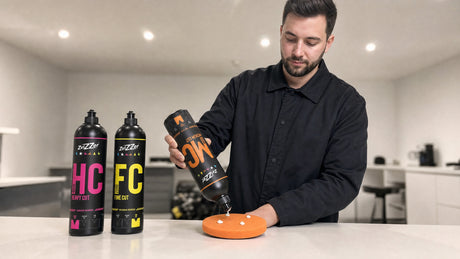
Pads, polishes and car care from the brand.
ZviZZer
Thermo Allrounder Pad "Medium" Thermo Foam Pad (Orange)
Medium open-cell thermo foam pad for one-step polishing
ZviZZer
Thermo Allrounder Pad "Soft" Thermo Foam Pad (Yellow)
Soft polishing pad with rubber backing for finishing and high gloss
ZviZZer
Thermo Allrounder Pad "Hard" thermo foam pad (Red)
Hard thermo foam pad with rubber backing for serious cut
ZviZZer
Thermo Trapez Pad "Soft" thermo foam pad (Yellow)
Soft thermo foam pad for finishing and hologram-free high gloss
ZviZZer
All-in-one polish with sealant for cut, gloss and protection
ZviZZer
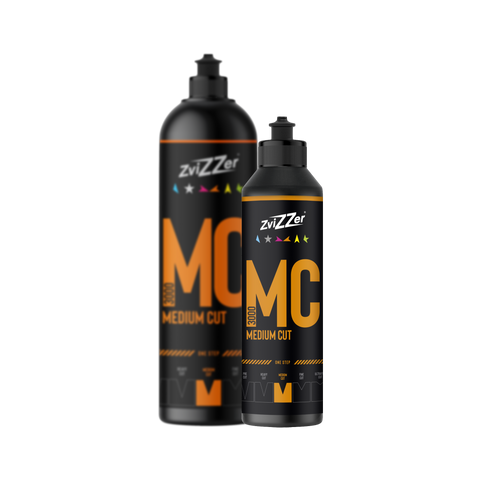
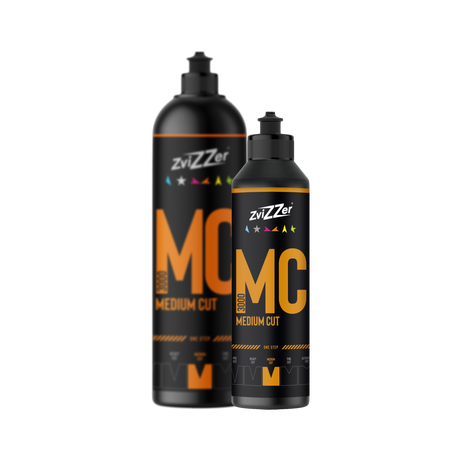
MC 3000 "Medium Cut" One-Step Polish (Orange)
Medium-cut one-step polish for correction and gloss
ZviZZer
Thermo Trapez Pad "Ultra Soft" Thermal Foam Pad (Green)
Ultra-soft green thermo foam pad for a hologram-free finish
ZviZZer
HC 4000 "Heavy Cut" Cutting Compound (Red)
Strong cutting compound for deep scratches and oxidation
ZviZZer
Thermo Trapez Pad "Medium" thermo foam pad (Orange)
Medium thermo foam pad for one-step polishing and correction
ZviZZer
Thermo Trapez Pad "Ultra Hard" thermo foam pad (Blue)
Ultra-hard trapezoid thermo foam polishing pad for maximum cut
ZviZZer
Thermo Allrounder Pad "Ultra Soft" Thermo Foam Pad (Green)
Ultra-soft finishing foam pad against holograms and for sealants
ZviZZer
Thermo Trapez Pad "Hard" thermo foam pad (Red)
Hard trapezoid thermo foam pad for serious cut
ZviZZer's polishing range is one joined-up system: polishes, thermo polishing pads and pad cleaner. From a deep scratch to concours gloss, every stage feeds into the next. For anyone who wants paint correction to run as a clean process, not a guessing game.
Polishing from ZviZZer isn't a single product but a matched system built from three parts: the polishes (the abrasive that cuts the paint), the thermo polishing pads (the tool that carries the polish and pulls the heat away) and the pad cleaner (the upkeep that keeps both parts working). A hologram-free result only comes from the three working together. Made in Germany, water-based, silicone-free.
Day-to-day from Detailing1: The most common polishing mistake isn't the wrong polish, it's leaning on the machine too hard. We see it again and again in the questions that reach us: someone pushes the machine into the paint and then wonders where the holograms came from. Cutting power comes from pad times polish, not from the weight of your arm. Let the machine run flat, keep the panel damp, and step up a hardness grade rather than pressing. Pressure makes heat, and heat makes exactly the defects you were trying to remove.
At ZviZZer, polish, pad and cleaner aren't separate shelves but three cogs in one process. Buy only one of them and you leave performance on the table.
The polish supplies the abrasive. It decides how much clear coat comes off and how fine the finish looks in the end. The pad supplies the tool: it holds the polish, presses it flat against the paint and carries the friction heat away. The pad cleaner keeps that tool clean, because a clogged pad just smears instead of cutting.
That interlock is the real thinking behind the line. ZviZZer treats polishing like a modular kit: same logic, same colours, same speeds across every component. You swap only the one part that matches the defect, and the rest of the process stays put. That cuts your error rate, because you're not working out what fits what from scratch on every car.
The practical payoff: you're not hunting for a new all-in-one product for every defect. You pick the right polish grade, add the matching pad colour, and clean both as you go. One maker, one logic, no product jungle. You'll find the full spread in the ZviZZer brand world, from heavy cutting correction to the final seal.
Having all three parts from the same maker is more than convenience. Polish and pad are tuned to each other, from how the foam takes up product to the friction heat at the intended speed. Mix in an outside polish with an outside pad and both can still work, but you give up any guarantee that the parts pull together. Inside the ZviZZer system you know that abrasive, carrier and upkeep were designed as one unit.
At ZviZZer every hardness and cut grade has its own colour. That colour runs through the polishes and the foam pads alike.
Blue marks the heaviest grade (Ultra Hard on the pad, Pre Cut on the polish), then come red (Hard, Heavy Cut), orange (Medium, One-Step), yellow (Soft, Fine Cut) and green (Ultra Soft, Ultrafine Finish with a seal). A blue pad belongs with the blue cutting polish, a green pad with the green finishing polish. That's not a marketing gimmick, it's a memory aid that stops mistakes on the job.
Why it helps: effective cutting power comes from pad times polish. A hard pad with a coarse polish cuts the most, a soft pad with a fine polish only refines. Stay inside one colour and the pairing hangs together. Mix the coarsest pad with a finishing polish and the friction overheats the paint without correcting cleanly.
One Polish plays a special role, the only polish without a grade colour. It's a 3-in-1 of cut, gloss and temporary protection, and its aggressiveness is set purely through pad choice: harder pad means more cut, softer pad means more finish. It shows the principle in its purest form, that the polish supplies the abrasive and the pad sets how aggressive it gets. You'll find the grade-by-grade polish choice laid out under the ZviZZer polishes, and the matching pad hardness under the ZviZZer polishing pads.
Polishing splits into two phases: first take material off, then build gloss. One product rarely nails both.
The cutting polishes handle the cut. Pre Cut (blue) clears deep scratches and sanding marks from P1500 grit, Heavy Cut (red) takes on heavy weathering from P2000. Both work without fillers and deliberately leave a light working haze. They hide nothing, they cut honestly. That's exactly why a finer step always follows the cut, to polish that haze back out.
One term runs through the whole system and helps here: the diminishing abrasive, a self-breaking aluminium oxide grit. It starts at full cutting power and gets finer as you polish instead of stopping dead. In plain terms: the abrasive works its own way from cut to finish without laying down fresh micro-scratches. For you that means an even, hologram-free finish without having to time it perfectly.
The fine grades handle the finish. Fine Cut (yellow) clears holograms after cutting, Ultrafine Cut (green) fetches the last percent of deep gloss and brings a sealing component along. Sitting between them is the One-Step polish Medium Cut (orange), which pulls correction and high gloss on well-kept daily paint into a single pass. So the system covers both jobs without you slotting in an outside brand.
One detail makes the finish at ZviZZer stand out: the finest grades carry a ceramic coat emulsion, a liquid protective mesh that bonds with the surface as you polish. For you that means the polish doesn't just level, it seals the fresh paint with a temporary layer of protection at the same time. Gloss and first protection in one go. A dedicated wax or coating afterwards gives the longer durability. Important: don't degrease after a sealing finishing polish, or the solvent wipes the fresh layer straight back off.
Dual action or rotary isn't a matter of faith, it's a matter of experience and the job in front of you. The ZviZZer system serves both.
The dual action machine moves the pad in a combined orbit and spin. It's forgiving, shrugs off beginner mistakes and barely overheats the paint because it works less concentrated. For most home users and for finishing work it's the safe pick. The rotary turns the pad hard around one axis, builds more pressure and heat and so cuts faster, but it asks for practice.
In practice: most ZviZZer pads run on both machines. One exception is the cone-shaped Cone Pad, meant for rotary only, because its small tip puts targeted pressure into tight spots, swage lines and edges. The priming speed sits system-wide at around 1,000 rpm, and you work it out depending on the grade up to roughly 1,600 to 1,800 rpm.
From what we see day-to-day: if you're just starting out, a dual action with a medium pad is far less stressful than a rotary with a hard pad. We regularly get asked whether a beginner can even go wrong. The honest answer: yes, above all on thin edges and on soft, often Japanese clear coats, where too coarse a combination burns through fast. There you start one grade milder than you think.
Pad size is part of picking the machine. Big panels like the bonnet or a door go far quicker with a full-size pad from about 50 millimetres across. Tight radii, mirror bases and emblem edges you only reach with small formats or the tapered Cone Pad. Too big a pad won't drop into a swage line, too small a pad on the bonnet costs you the afternoon. The system offers both extremes, from around 30 to 165 millimetres.
A pad isn't an accessory that lasts forever. It's the actual tool of the correction, and it wears out.
Every ZviZZer pad is built on the open-cell thermo foam core. Open-pored means the cell structure is permeable like a fine sponge and moves the friction heat outward instead of storing it in the material. The core holds its shape under load and so keeps the cut steady across the whole polishing pass. For you that means a more even finish and up to six times the service life of standard foam, because the pad doesn't collapse or burn early.
Alongside the foam pads in five hardnesses there are three more materials on the same thermo core. Wool pads give the strongest first cut for heavy defects. Microfibre pads cut faster than an equally aggressive foam pad and finish finer at the same time, which makes them the all-rounder for the One-Step polish. Velour pads barely cut and are the pure finishing and sealing grade, also ideal for laying down liquid waxes streak-free. One material, one job, all in the same system with the same velcro backing for common backing plates.
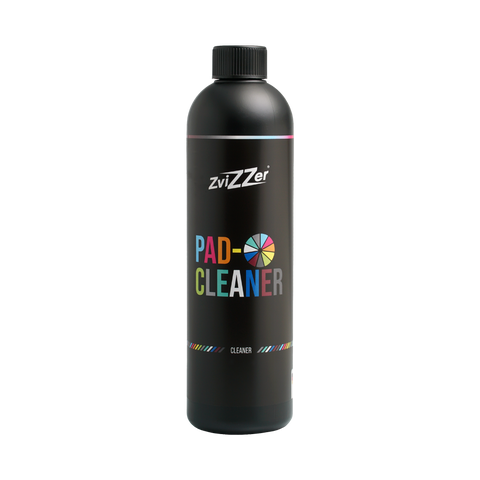
For that service life to actually land, the pad needs upkeep. A pad clogged with polish, wax and paint residue smears, spreads the polishing film unevenly and throws up exactly the holograms the polish is meant to remove. How you keep foam, wool and microfibre pads clean, and the cut steady with them, is shown by the ZviZZer pad cleaner. Cleaning during the work, not just at the end, is the real lever here.
The honest answer to which product is right: it depends on the state of the paint. Three typical cases show the logic.
Deep scratches and heavy weathering: you start coarse here. Pre Cut or Heavy Cut on a hard pad (blue or red), then work your way down through Medium until a finishing step in yellow or green closes the gloss. That's the multi-stage route for real correction. Important: every cut costs clear coat, and at a typical 40 to 50 microns that's finite. On thin paint and at edges, go milder or measure the coating thickness first.
Well-kept daily paint with fine swirls: one step does it. The One-Step polish MC 3000 Medium Cut on a microfibre or medium foam pad corrects and shines in a single pass, hologram-free. That's the pragmatic default for most cars that just need their depth back. For the last concours percent you put a pure finishing polish on top afterwards.
Show-car finish on already good paint: this is only about gloss now, not correction. A soft velour or Ultra Soft pad with Ultrafine Cut brings the deep gloss and a seal along with it. Something we watch happen again and again: plenty of people underrate how much a single clean One-Step pass pulls out of dull paint without the full multi-stage correction. So if you're unsure, start in the middle, not with the coarsest pad, and only step up when the defect demands it.
Too much choice in Polishing by ZviZZer? Get help picking:
Add Detailing1 as a preferred source on Google
Daniel von Detailing1 |

Daniel von Detailing1 |

Daniel von Detailing1 |

Daniel von Detailing1 |

Daniel von Detailing1 |

Daniel von Detailing1 |

Jasper von Detailing1 |

Daniel von Detailing1 |

Daniel von Detailing1 |

Jasper von Detailing1 |

Daniel von Detailing1 |

Daniel von Detailing1 |