Cleaning an Alcantara steering wheel: grippy again, not greasy
Daniel von Detailing1 |


Koch-Chemie
Pro Glass Towel 230GSM Microfibre Glass Cloth


THE COLLECTION
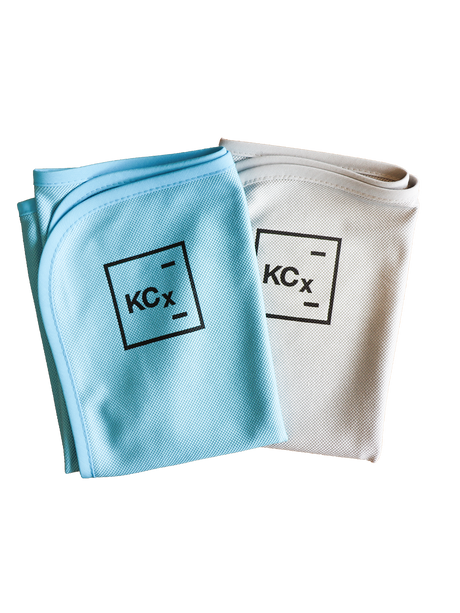
"Waffle" Waffle-Weave Glass Cloth Microfibre Towel (450 GSM)
Streak-free glass cloth with high absorbency
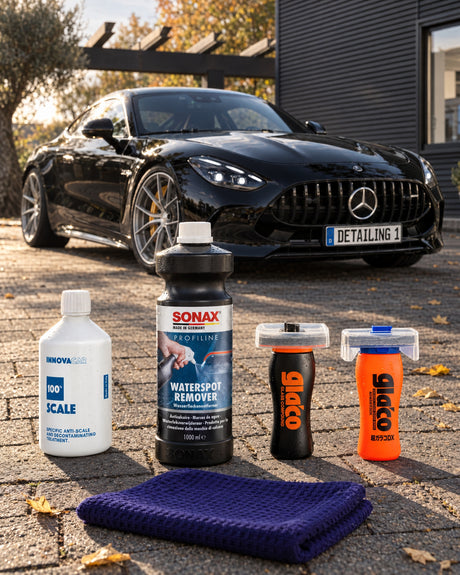
On the surface, acid dissolves it. Etched in, only polishing helps.

Meguiars
PERFECT CLARITY Glass Towel Microfibre Cloth
Specialized microfiber cloth for streak-free car windows
The Rag Company
Diamond 280GSM Microfibre Glass Cloth
Glass cloth for streak-free cleaning on glass & mirrors
What are glass towels? Microfibre towels that only ever see windows, mirrors and displays in the car. They take up glass cleaner, water and the film on the inside of the windscreen without putting residue back. Waffle towels soak up, tighter-woven towels do the final wipe. Wax, detailer and dashboard dressing never touch them.
Glass towels are microfibre towels with one single job: the glass on your car. Windscreen inside and out, side windows, mirrors and the displays in the cockpit. Unlike an all-round towel from paint care, they don't carry any wax, detailer or dressing residue. That's exactly what counts on glass, because every bit of residue shows up as a streak against the light. You pick a glass towel by its job, soaking up or final wipe, not by the highest GSM.
Detailing1's tip from the shop: Wash a new glass towel before you use it for the first time; THE COLLECTION states this explicitly for the Waffle. After that, it never goes in the same drum as wax, polishing or wheel towels and never comes into contact with fabric softener. A glass towel that's been dropped on the floor goes back in the wash before it's allowed near a window again. Mineral particles in the weave can scratch glass too, not just paint.
What sets a glass towel apart from a normal microfibre towel isn't some miracle material, it's what it has touched before: only glass, glass cleaner and water.
Microfibre picks up dirt mechanically. The split polyester and polyamide fibres pull liquid and particles into the gaps between them. Whatever was sitting in those gaps before comes back out on the next wipe. On paint, a slightly greasy towel residue hardly shows. On the windscreen, it's right in front of you as haze in the headlights at night.
So the glass towel question is first about keeping things separate and only then about the weave. A towel that has once taken off spray wax, quick detailer or trim dressing keeps releasing small amounts of them. The window looks clean after you've wiped it and shows every pass the next morning, as soon as the sun sits low.
That's why the scene works with fixed colours. The parent category Towels & microfibre explains the colour system in detail; with us, blue means glass. For this page, the consequence is all you need: a glass towel is a towel you never use for anything else. A paint or wheel towel never gets promoted to glass towel later.
According to Ahrefs, monthly search volume for glass towels in Germany has grown by 59 percent in five years, but the search results mostly show window and mirror cloths for the home. The job in a car is different. On the inside there's a film you don't get like that in a living room, plus window tint, touchscreens and the cover glass of the head-up display.
With a glass towel, the weave decides the job: waffle soaks up a lot of liquid, smooth-woven towels give almost nothing back, and diamond sits in between and glides best when slightly damp.
The waffle towel has small pockets in the weave. Water, cleaner residue and loosened dirt disappear into them instead of being pushed around the glass. That makes the waffle the towel for the first, absorbing wipe and for drying small areas after a wash. THE COLLECTION lists exactly these uses for the Waffle: taking off glass cleaner, mirrors, displays, spot drying.
Smooth or tightly woven towels hold less. That sounds like a drawback and is the advantage on the last pass, because a towel with little capacity also gives little back. Makers of smooth glass towels such as Adam's or Duel Autocare use them specifically for the finish.
Diamond is a hybrid of waffle and smooth weave. The Rag Company recommends dampening the diamond towel slightly with water or spray cleaner and then wiping over with a clean towel. Used dry as a finishing towel, community users describe it as grabby, more drag than glide. That's not a flaw in the towel, it's a hint about its role.
The scene doesn't agree on which weave is better. Manufacturers use the waffle for the first wipe, while one community user reports never getting the glass fully dry with waffle towels and switching to smooth ones. Our take: the role in the routine decides, not the weave alone. Soaking up and the final wipe are two moves, and there's a weave for each.
Some manufacturers combine both moves in one towel. On the Premium Glass & Window, The Rag Company pairs a textured cord side for loosening with a smooth side for the final wipe. That saves a towel in the glovebox but takes discipline: the wet side mustn't soak through to the dry side when you flip it, or the idea loses its edge.
GSM gives the weight of the towel in grams per square metre; for a glass towel, the number describes capacity and job, not the quality of the towel.
The figures in the range are far apart. The Koch-Chemie Pro Glass Towel has 230 g/m² with a very fine structure, The Rag Company Diamond 280, the GYEON Q²M GlassWipe EVO 390 and the Waffle from THE COLLECTION 450. Each of these numbers stands for a towel built for glass. None is worse for being lighter.
Higher GSM means more capacity. For the first wipe, which has to take up cleaner and loosened film, that's what you want. For the last pass, a big capacity tends to get in the way, because a nearly saturated towel gives moisture back. The blanket rule from the towel shelf, heavier means more absorbent and therefore better, falls short on glass.
Why a 450 GSM waffle towel still belongs on glass comes down to structure. The waffle is flat and has no plush pile in which fibres come loose or residue hides. You'll find the general weight classes and edge types for microfibre under Microfibre towels. For glass, what counts is how flat the weave lies and how much it's meant to soak up.
The size follows the job too. 40 × 40 cm, as on the Waffle and GlassWipe EVO, folds once and gives you several fresh sides for one window. Bigger sizes such as the 60 × 40 cm of the Koch-Chemie towel cover a rear window in fewer passes, but the result isn't any better. Inside, behind the steering wheel, the smaller size is handier.
The haze on the inside of the glass comes from three sources: outgassing from the interior, skin oils and smoke, and residue from the very towel you're trying to remove it with.
Plastics, vinyl and textiles in the interior release volatile compounds when warm, and these settle on the cooler glass. The materials industry calls this fogging; for new vehicles, a service bulletin documents a faster film build-up. How this film forms chemically and which cleaner dissolves it is explained in detail in the Glass cleaner category.
The towel side of the problem gets less attention. A glass towel that has been washed with wax, dressing or polishing towels brings along exactly the substances that sit on the glass as film. The same goes for fabric softener, which coats the fibre and transfers to the glass the next time you use it. The result looks like a bad cleaner and is really a contaminated towel.
So on the inside, you spray the cleaner onto the towel, not the glass. Mercedes-Benz points out in its owner's manual that excess liquid can run behind trim panels and damage electronics. The waffle towel takes up loosened film and cleaner, and the second, dry towel does the final wipe. The full routine, including wiping direction, is on the glass cleaner page.
Two conditions amplify every towel mistake: hot glass and too much product. On a sun-warmed window, the cleaner dries before the towel can pick it up, and a towel loaded with cleaner saturates quickly. Better a little cleaner on the towel and the glass worked in the shade.
Whether the glass is really clear only shows against the light. Several voices in the community advise checking the result in low sun or the next morning, not in the shade straight after cleaning. If an even haze remains even though cleaner and technique are right, take a look at the towel and its last wash.
In the glass towel category, the THE COLLECTION "Waffle" is our standard: 450 GSM waffle, 40 × 40 cm, 70 percent polyester and 30 percent polyamide, with a suede edge.
The Waffle covers the absorbing part of glass work. It takes off glass cleaner, dries mirrors and small glass areas after a wash and, according to the manufacturer, also works on displays. The suede edge is meant for surfaces where a hard edge would get in the way. For a window inside and out, plan on two of them, or one Waffle plus a second, dry towel.
If you work in the GYEON system, the GYEON Q²M GlassWipe EVO Waffeltuch aus Mikrofaser für Glasreinigung (390 GSM) is a slightly lighter waffle towel in the same size. Two GlassWipe EVOs cover both moves, one for loosening and spreading, one for the finish. In the shop it sits under microfibre towels.
The SONAX PROFILINE MicrofaserTuch "Glas" Mikrofasertuch comes in a pack of three. SONAX describes it as absorbent and lint-free and recommends it together with its own glass cleaners. Three towels are handy for detailers who do several cars a day and want a fresh towel per car.
The glass tells you when a glass towel is done. A sign it's time to replace it: after washing, the towel no longer takes up moisture, or it starts to glide across the glass instead of gripping. If a freshly washed towel leaves lint or streaks on clean glass, it's no longer a glass towel. It can carry on working on wheels or door sills.
If you only do the windows now and then, you don't need a whole set. One Waffle for the first wipe and a second, clean towel reserved for glass only from today are enough for inside and out. In our shop, customers search about six times more often for glass cleaner than for glass towels. Yet the towel shares the say in the result, because it either picks up the loosened film or spreads it around.
On window tint, touchscreens and the head-up display, the weave matters less than the condition of the towel: clean, soft, no sand and no ammonia-based cleaner.
For window tint, XPEL recommends a microfibre cloth slightly dampened with water and, if needed, a mild ammonia-free cleaner. 3M advises against cleaning freshly fitted film for 48 hours and warns of sand or dust in the water as a scratch risk. Blades, scrapers and abrasives have no business on film. The glass towel should only work with light pressure here.
Displays can have an anti-glare or anti-fingerprint coating. BMW names this explicitly for its touchscreens and advises against ammonia-based products there; Volvo specifies a clean, dry microfibre cloth without window cleaner, alcohol or ammonia. Volvo cleans the head-up display cover glass dry or with a slightly damp cloth, Mercedes-Benz with a soft, lint-free cloth and no cleaning agent. Your clean glass towel does the job; only use a glass cleaner there if the vehicle manufacturer approves it.
On coated glass the glass towel stays the same; go easy on the tools. GYEON recommends normal glass cleaner and no abrasive pads for coated glass. Polycarbonate windows, like those on some track cars, aren't glass. Here the window maker's approval applies before any cleaner goes on.
One area inside deserves special attention: the patch in front of the camera behind the rear-view mirror. Mercedes-Benz points out that dirt or fogging in front of the multifunction camera can limit driver assistance systems. Work there with a slightly damp glass towel and little cleaner so no liquid runs into the housing.
The limit all these notes share is the towel itself. On film, displays and the head-up display, it's the only tool that touches the surface: blade, pad and abrasives are out, cleaner only with approval. What the towel leaves behind there, no further step will fix. That's why these surfaces get your cleanest, separately washed glass towel. How to wash glass towels properly is shown on the Microfibre detergent page.
Too much choice in Glass cloths? Get help picking:
Add Detailing1 as a preferred source on GoogleA glass towel is a microfiber towel reserved exclusively for windows, mirrors, and displays. The difference lies not so much in the material as in its history: it has never encountered wax, detailers, or plastic protectants, meaning it does not transfer any residue onto the glass. In addition, there are weaves such as waffle or smooth-weave that are designed for absorption or final buffing.
A waffle towel is used damp: it absorbs glass cleaner, water, and loosened film, such as the Waffle from THE COLLECTION. Follow up with a second, dry towel that has low absorbency and therefore leaves virtually nothing behind. The Rag Company recommends using a diamond towel slightly dampened, followed by a clean towel. For the interior, spray the cleaner onto the towel.
Neither is better overall; they have different roles. The waffle towel absorbs a lot of liquid and is suitable for the initial wipe and minor drying tasks. A smooth-weave towel has low absorption and is suitable for the final pass. One community user reported switching from waffle to smooth towels. The keys to success are using clean towels and following the correct sequence.
There are three likely causes: the new towel was not washed before its first use, it was in the same drum as wax or polishing towels, or it was too wet. Furthermore, there is the film from off-gassing and skin oils that the first towel must absorb. Check the results against backlight and change the towel as soon as it becomes saturated.
Yes, provided the towel is clean and free of sand. For tinted film, XPEL recommends a microfiber towel lightly dampened with water and an ammonia-free cleaner if necessary; 3M advises not to clean newly installed film for 48 hours. Volvo cleans displays with a clean, dry microfiber towel, while BMW advises against ammonia for that purpose. Mercedes-Benz cleans the head-up display with a soft, lint-free cloth without cleaning agents.
Wash glass towels separately from wax, polishing, and wheel towels, without fabric softener and without cotton in the drum. THE COLLECTION approves the Waffle for temperatures up to 60 °C. If the detergent and the towel label specify different temperatures, the lower limit applies. The page Microfiber Detergent explains which detergents remove care product residues from the fibers.
Daniel von Detailing1 |

Daniel von Detailing1 |

Daniel von Detailing1 |

Daniel von Detailing1 |

Daniel von Detailing1 |

Daniel von Detailing1 |

Daniel von Detailing1 |

Daniel von Detailing1 |

Daniel von Detailing1 |

Daniel von Detailing1 |

Daniel von Detailing1 |

Daniel von Detailing1 |